
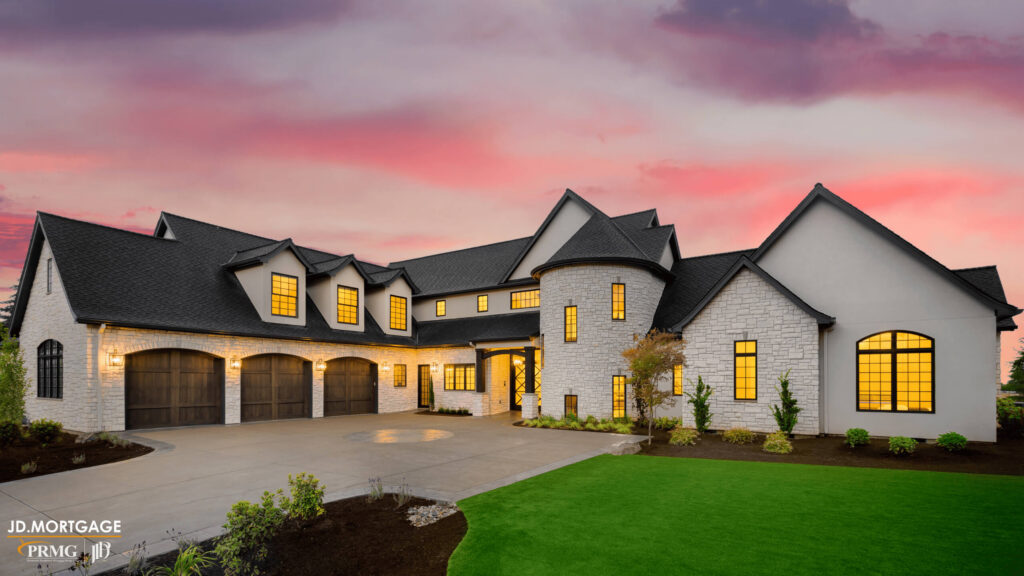

A retiring service member called me last week. He was PCSing to Las Vegas with his wife, also a 100% disabled veteran. They had their eyes on a new-construction home from a major national builder. The base price was $858,000. The builder was offering about $21,500 in incentives — but only if they used the builder’s in-house lender for the pre-approval first. Here is the actual problem: if the in-house lender turns the file down on its own overlays, the builder will often act like the incentive is gone. It is not. But you have to know what to ask for before you sign.
We laid out the structure on the call. His wife as the primary borrower, with the VA funding fee waived because of her 100% disability rating. His entitlement preserved for a future rental. A full pre-approval through me at no-overlay VA terms, running in parallel with whatever the in-house lender does. And a clear plan for the moment the builder’s lender comes back with an overlay-based “no” — the incentive stays with the contract, not with the lender. That is the conversation builders do not want you to have before you sign.
What “No Overlays” Means
An overlay is a credit rule a lender adds on top of VA’s. We don’t add them — we underwrite to VA guidelines. Separate from underwriting, every VA loan must also be eligible for sale or securitization, and Ginnie Mae sets pooling requirements that apply to all lenders and that no lender can waive. Refinances in particular carry seasoning requirements under Ginnie Mae that are broader than VA’s. We’ll tell you upfront if one applies to you.
Last updated: October 6, 2026
Guidance reference: VA Pamphlet 26-7, Ch. 2, 3, 8 and 13 (VA updated July 9, 2026); Ch. 4 (VA updated August 26, 2026); Ch. 12 (VA updated August 12, 2026); VA Circular 26-25-10 (December 1, 2025)
The Setup: A Dual-Veteran Couple Buying New Construction
Here is the actual situation, anonymized:
As of Q3 2026 (September 2026): VA sets no minimum credit score. Any score floor is an extra rule a lender adds (VA Pamphlet 26-7, Ch. 4; 38 CFR 36.4340). VA uses 41% as a check point, not a limit, for how much of your monthly income goes to debt payments (your debt-to-income ratio). Above 41%, we take a closer look, unless the money left over each month after your bills is at least 20% above VA’s chart. If not, a supervisor can still approve the loan with a signed note listing your strengths (VA Pamphlet 26-7, Ch. 4). With full entitlement (your full VA home loan benefit), there is no VA loan limit. VA asks for no down payment in most cases, but if the price is above VA’s value for the home, you pay the difference in cash. If part of your benefit is still in use (partial entitlement), it is measured against your county’s 2026 loan limit: $832,750 in most counties and higher in some high-cost counties (VA.gov; FHFA, November 25, 2025). The funding fee (a one-time VA fee) is 2.15% on a first-use purchase with less than 5% down and 3.3% on later use with less than 5% down. On an IRRRL (VA’s refinance to lower your rate), it is 0.5% (VA.gov, effective April 7, 2023).
- Both spouses are veterans. The retiring spouse is anticipating a 100% disability rating in August. His wife is already rated 100% disabled.
- The home is a new-construction build from a national builder. Base price $858,000, with roughly $30,000 in upgrades expected.
- The builder is offering about $21,500 in incentives — $20,000 toward closing costs or a rate buydown, plus a $1,500 military bonus.
- The build will not be ready until November or December. Closing is five months out.
- The retiring spouse has a civilian job offer pending with base compensation around $120,000.
- His wife’s consumer-app credit scores show wide variation — 618 to 651 — caused by an old cosigner situation on a family vehicle.
- The builder requires using its in-house lender for the pre-approval before construction starts.
- His wife has never used her VA entitlement. He used his once before in Maryland.
What looks like “we just need a pre-approval” is actually four decisions at once. Who is the primary borrower. When the funding fee gets waived. How the builder’s incentive survives a denial from the in-house lender. And whether your future VA entitlement gets used up on a home you might not live in long-term.
Why Builder In-House Lenders Trip Up Strong VA Files
Big national builders run their own in-house lenders. Those lenders often add extra rules on top of what VA asks for (lenders call them overlays). A common one is a minimum credit score, even though VA has none. Another is a hard cap on how much of your income goes to debt. That cap ignores VA’s check of the money left over each month after your bills (VA calls this residual income). Some refuse to have a person review a file by hand at all. A strong VA buyer can be approved at a lender with no extra rules and still get a “denied” letter from the in-house lender.
The builder then uses that denial letter as leverage. The sales rep will say the incentive is contingent on financing through the in-house lender. That is sometimes true and sometimes not — it depends entirely on how the contract is written. The negotiation has to happen before the contract is signed, not after.
Hard rule that gets ignored
A pre-approval from the builder’s in-house lender is not the same as a VA approval. The in-house lender follows its own overlays, not VA’s actual guidelines. A “denial” from them often means “we do not write this kind of file” — not “this file cannot close.” A no-overlay VA lender underwrites the same borrower to VA’s actual standards.
The Fix: VA Loan Through a No-Overlay Lender, Spouse as Primary Borrower
The structure we built was a VA loan with the wife as the primary borrower. Because she is rated 100% disabled, the VA funding fee is waived. Because she has never used her entitlement, the full benefit is available. And because we are a no-overlay VA lender, the file gets underwritten to VA’s actual guidelines — not to a builder lender’s overlay stack.
This unlocks a few things at once. The retiring spouse’s entitlement stays untouched, so he can use it later for a rental or the next PCS home. The funding fee — which on a loan this size at the first-use rate would be roughly $18,400 — is zero. And the file gets reviewed against residual income and compensating factors, not just a hard DTI line.
What the VA file actually requires
VA entitlement available
At least one spouse needs to have VA entitlement available. A dual-veteran household with one spouse who has never used the benefit gives the cleanest path and preserves the other spouse’s entitlement for future use.
Proving the funding fee exemption
A spouse who wants to skip the VA funding fee (a fee paid to VA) usually does not need a rating letter. Their Certificate of Eligibility (VA’s record of their benefit) shows if they are exempt, and we can rely on it. A pending rating does not count at closing, so the fee is paid. VA may refund it if the rating dates back before closing.
Acceptable credit profile
VA itself has no minimum credit score. No-overlay lenders underwrite to VA’s actual guidelines. Consumer-app scores almost always run higher than the scores that show on a mortgage credit pull.
Income documentation
Both spouses can be co-borrowers. Pension, VA disability compensation, and a confirmed civilian job offer can all count with the right documentation. Pending claims and pending offers do not.
Property eligibility
The home has to meet VA’s basic safety and condition rules. New-construction homes generally meet them. The VA appraiser still lists any repairs that are easy to see, and those must be done before VA backs the loan. The appraisal is not a home inspection, and it does not test whether the home’s systems work.
Seller concession structure
VA caps seller concessions (extras beyond normal closing costs) at 4% of VA’s value for the home. Builder-paid normal closing costs and normal points (a fee paid up front for a lower rate) do not count toward that 4%. Builder money for extras, like your funding fee (a one-time fee paid to VA) or extra points to buy the rate down further, does count. Builder incentives have to be itemized on the contract correctly to be usable.
VA loan rules here come from the VA Lender Handbook. Program details follow current PRMG VA program guidelines. Subject to change. Your Certificate of Eligibility (VA’s record of your benefit) shows if you are exempt from the VA funding fee (a fee paid to VA). We can rely on it, so a rating letter is usually not needed. Limits on seller concessions (extras the seller pays for you beyond normal closing costs) follow VA Lender Handbook Chapter 8.
How We Plan New Construction VA Files Five Months Out
Five months is plenty of time when the file is structured right from day one. The risk is not the timeline. The risk is letting the builder’s in-house lender control the narrative on what the file “qualifies” for. The fix is parallel processing: an outside pre-approval done correctly, and a clear plan for the moment the in-house lender stalls.
Confirm which spouse is the primary borrower
In a dual-veteran household, the spouse with available entitlement and a current 100% disability rating goes first. This waives the funding fee and preserves the other spouse’s entitlement for future use. The decision is made before any pre-approval is pulled.
Submit the outside pre-approval in parallel
Submit a full pre-approval to a no-overlay VA lender at the same time the builder is asking for its in-house pre-approval. The outside pre-approval is the leverage you need later. Without it, you are negotiating from nothing.
Let the in-house lender finish its process
The builder will require its in-house lender to review the file. Let them. If they approve, you have choices. If they deny, you have leverage to keep the incentive — because a documented outside pre-approval is already in hand and the home still closes.
Negotiate the incentive into the contract directly
Write the contract with the seller concessions itemized and tied to the property, not to the lender. The builder cannot fairly claim the incentive is forfeit if you are still buying the home — but you have to negotiate that explicitly. Builders do not volunteer the option.
The Honest Tradeoff
The honest tradeoff with new construction is patience. A five-month build window gives the file room to breathe — credit can settle, a pending disability rating can finalize, a new civilian job can season. That is a real advantage for VA borrowers with anything in transition.
The cost of that patience is the builder’s lender process. You can refuse to go through the in-house lender entirely — but you usually lose the incentive doing it. Going through the in-house process, getting the file declined on overlays, and then closing with your own lender keeps both the home and most of the money on the table.
Frequently Asked Questions
Do I have to use the builder’s in-house lender to get the incentive?
Most national builders require you to be pre-approved by their in-house lender before construction starts. They do not always require you to close with that lender. If the in-house lender denies your file or quotes worse terms, you can usually still close with an outside lender and keep most or all of the incentive — but only if you negotiate that into the contract before you sign.
Can I get a VA loan on a new construction home from a national builder?
Yes. VA loans work on new-construction homes you will live in, including national builder homes. The VA appraisal happens close to the completion date. The home does not have to pass on that day. The appraiser lists any repairs it needs, and the home must meet VA’s basic safety and condition rules before VA backs the loan. The builder’s standard finishes generally meet VA standards.
Why would I put my 100% disabled spouse as the primary borrower on a VA loan?
Two reasons. First, a Veteran who gets VA disability pay for a condition tied to their service pays no funding fee. On a larger loan, that can save tens of thousands of dollars. Second, putting one spouse on the loan keeps the other spouse’s VA home loan benefit (VA calls it entitlement) free for a future home. That helps if you plan to keep this home as a rental later.
What happens to the builder incentive if I switch to an outside lender?
It depends entirely on how the contract is written. If the incentive is tied to using the in-house lender as a condition of sale, you may lose it by switching. If the incentive is structured as a seller concession tied to the property, it stays with the deal. The negotiation happens before you sign, not after.
How long does a new construction VA loan take to close?
From contract to close, a typical new-construction VA loan tracks the builder’s construction timeline — often four to six months. The VA appraisal happens near completion, not at contract signing. The lender uses the build window to gather documentation, lock the rate at the right time, and clear conditions before the home is ready.
Can I use my pending VA disability rating before it is approved?
No. The funding fee waiver requires the VA disability rating to be active and documented at the time of closing. A pending claim does not count. If a borrower has a claim in process, the path is to either delay closing until the rating finalizes or to plan around paying the funding fee with a refund process afterward — which is slow and not always reliable.
Can both spouses’ incomes be used on a VA loan?
Yes. Both spouses can be co-borrowers on a VA loan, and both incomes can be counted toward qualifying when both are on the loan. Pension, VA disability compensation, and verified employment income are all usable income sources with the right documentation.
Are consumer credit scores the same as the credit scores on a mortgage application?
No. Consumer credit-monitoring apps run on different scoring models than the credit scores pulled for a mortgage. In almost every case, the mortgage credit score is lower than what shows in a consumer app — sometimes by 20 to 50 points. The actual approval depends on what shows on the mortgage credit pull, not on what the consumer app reports.
More on VA Loans and Smart Loan Structuring
VA Home Loans
The full VA program — no-overlay underwriting, manual underwriting, residual income, and the structure for veterans buying a primary home.
VA Loan Denied After Pre-Approval
What happens when a pre-approval falls apart after a contract is written — and how a no-overlay VA lender pulls the file back together.
Loan Options
The full menu of loan products — VA, FHA, USDA, Conventional, Non-QM, DSCR, HELOC, and more — for borrowers comparing structure across products.
Construction Loans
Ground-up construction financing for owner-builders and custom-build scenarios — separate from the national-builder new-construction path.
Written by J.D. Peck
Area Manager / Mortgage Loan Originator at Paramount Residential Mortgage Group, Inc.
NMLS #314883 | PRMG NMLS #75243 | Lending in 49 states.
Source: JD.Mortgage Team at PRMG, New Construction VA Loan: How to Keep the Builder Incentive, updated September 2026, https://jd.mortgage/new-construction-va-loan-builder-incentive/