
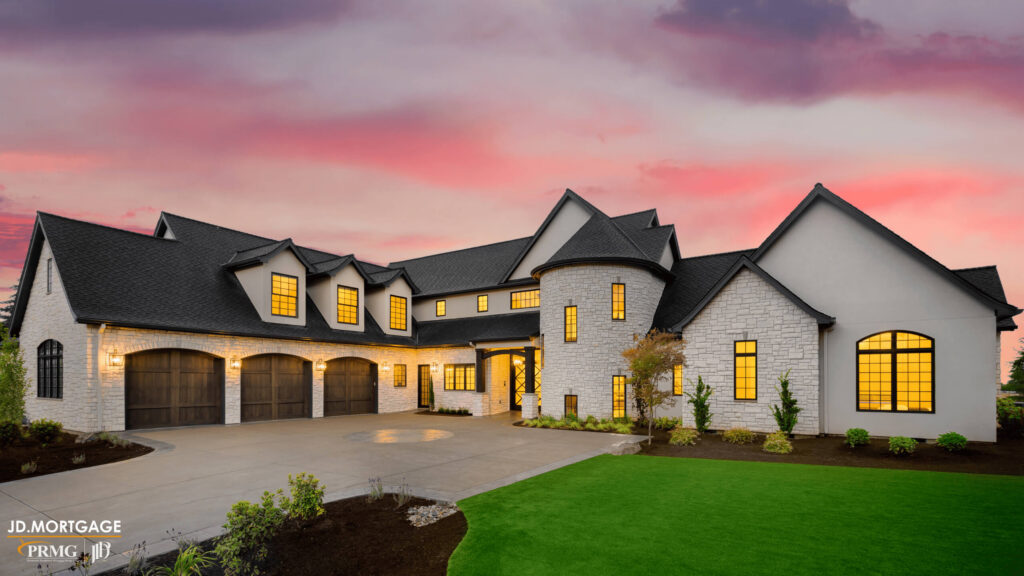

A Sergeant First Class at Fort Carson came in with a straightforward concern: the housing payment on a new build was going to run several hundred dollars over his BAH, and he wasn’t sure that math made sense. His credit score was 598. The home was $491,000. And on paper, the payment felt like too much.
He was looking at one number. He needed to look at the whole budget.
By the time we closed on June 10th, the builder had paid off nearly $12,000 in credit card debt — eliminating approximately $450 per month in minimum payments — prepaid his first two mortgage payments, funded a permanent rate buydown, and covered every dollar of closing costs. He brought nothing to the table. And when we ran the full monthly comparison, he was approximately $45 per month ahead of where he started. The housing payment was higher than BAH. His total obligations were lower than before he bought.
Active duty and wondering if the numbers work for you?
We run the full budget comparison — BAH, base pay, all obligations — before we issue a pre-approval.
No SSN required. No credit pull. Takes about 2 minutes.
The Setup: BAH as a Budget Floor, Not a Ceiling
BAH is designed to cover typical housing costs in a given area. It is not a cap on what you are allowed to spend on housing, and it is not the qualifying standard for a VA loan. VA qualifies borrowers on residual income — what is left after every debt, tax, and housing obligation is paid. BAH feeds into that calculation as income, not as a payment limit.
This SFC had BAH coming in every month. He also had approximately $12,000 in credit card balances generating roughly $450 in minimum monthly payments. Those payments were working against his budget and against his residual income. They weren’t going away on their own — but they could be eliminated at closing if the builder’s incentive package was structured right.
The actual numbers going into the closing table:
- Purchase price: $491,000 — new construction
- Credit score: 598
- Rank: Sergeant First Class, active duty, Fort Carson
- Credit card debt to be eliminated: ~$12,000
- Monthly credit card payments eliminated: ~$450/month
- Housing payment vs. BAH: ~$400 over BAH
- Net monthly change: ~$45 less per month overall
598 Credit Score and a $491K Purchase: What Made It Work
VA does not set a minimum credit score. The guideline is residual income — and for an active duty SFC, the income picture is stable by definition. Base pay, BAH, and any applicable special pays are all documentable on the Leave and Earnings Statement. That stability is a compensating factor in manual underwriting.
A 598 score means most lenders say no before they open the file. That is their overlay, not VA’s rule. At a no-overlay VA lender, a 598 is evaluated the same way any score is — against the full credit history, the cause of any derogatory items, and the residual income picture after all obligations are accounted for. In this case, the credit card balances were part of the story. Eliminating them at closing through the builder’s concession allowance changed the residual income calculation in his favor.
BAH as qualifying income — the gross-up rule
BAH is non-taxable. VA guidelines allow non-taxable income to be grossed up by 25% for qualifying purposes — meaning a $2,000 BAH effectively qualifies as $2,500. This applies to BAS and other non-taxable military allowances as well. It is verified through the LES and does not require the borrower to do anything special.
What “No Overlays” Means
An overlay is a credit rule a lender adds on top of VA’s. We don’t add them — we underwrite to VA guidelines. Separate from underwriting, every VA loan must also be eligible for sale or securitization, and Ginnie Mae sets pooling requirements that apply to all lenders and that no lender can waive. Refinances in particular carry seasoning requirements under Ginnie Mae that are broader than VA’s. We’ll tell you upfront if one applies to you.
How the Builder Incentive Was Structured
Under VA Chapter 8, builder contributions work across three separate allowances — and understanding the distinction is what makes a package like this possible. Standard closing costs: no cap, builder can cover all of them. Discount points for a permanent rate buydown: also no cap, treated separately from concessions. The 4% concession limit applies only to items beyond those two categories — debt payoffs, prepaid mortgage payments, and similar items. On a $491,000 purchase, all three buckets together create meaningful room. Here is how every dollar was directed.
Move 1
Pay Off ~$12,000 in Credit Cards
Nearly $12,000 in credit card balances paid off at closing using the VA concession allowance. Minimum monthly payments of approximately $450 per month removed from the budget entirely — and removed from the DTI and residual income calculation permanently.
Move 2
Prepay First Two Mortgage Payments
Two full mortgage payments prepaid at closing using the VA concession allowance. The first two months after move-in are covered. That runway gives the SFC time to get established without a mortgage payment due in the first 60 days.
Move 3
Permanent Rate Buydown
Builder-funded discount points reduced the interest rate for the life of the loan. Under VA Chapter 8, these points are not counted against the 4% concession limit — they are a separate allowance. Every payment going forward is lower than it would have been at par pricing. The rate cannot step up.
Move 4
All Closing Costs Covered
Every closing cost and prepaid item was covered by the builder with no dollar cap — standard closing costs are a separate allowance under VA Chapter 8 from the concession limit. No out-of-pocket expense at the table. Earnest money returned at closing.
Matrix reference: VA Lender’s Handbook Chapter 8. Standard closing costs: no cap — builder may cover all allowable closing costs. Discount points for a permanent rate buydown: no cap, not counted against the concession limit. VA concessions (4% of purchase price): items beyond closing costs and points, including credit card payoffs and prepaid mortgage payments. Credit card balances paid in full at closing are removed from DTI. BAH is non-taxable income grossed up 25% for qualifying per VA Lender’s Handbook Chapter 4. All figures represent this specific closed transaction. Guidelines subject to change.
Want to see what your builder incentive package could do?
We map every available dollar across all three VA allowances before you sign a contract.
No SSN required. No credit pull. Takes about 2 minutes.
How We Got a 598 Score Through Underwriting on a $491K New Build
A 598 score on a $491,000 new construction VA purchase is not a file most lenders will touch. Getting it to the closing table requires the right sequence from the start:
Read the full file before issuing any letter
A 598 score means the automated decision system is going to kick the file out. We knew that going in. The pre-approval was built on manual underwriting logic — residual income, credit history pattern, LES documentation — before any letter went out. The pre-approval was real.
Map the full incentive across all three VA allowances
VA’s Chapter 8 rules run in three separate buckets — closing costs, discount points for a permanent buydown, and concession items. Only the concession bucket has a cap. We sized the credit card payoff and prepaid mortgage payments against the 4% concession limit on a $491,000 purchase before the contract was signed so every number on the closing disclosure was clean from day one.
Reframe the monthly budget from BAH to total obligations
The SFC’s concern was that the housing payment exceeded his BAH. We rebuilt the comparison: all current monthly obligations before the purchase versus the housing payment after eliminating the credit card debt. The total picture was $45 per month better after closing than before.
Manual underwrite and close
The file went to manual underwriting with full LES documentation, a complete credit history narrative, and the builder incentive package correctly mapped on the purchase contract. Closed June 10th. Earnest money returned. Zero out of pocket.
The Monthly Math: Before and After
Active duty servicemembers are often told that a VA loan “doesn’t make sense” if the housing payment exceeds BAH. That is not how VA qualification works, and it is not how monthly budgets work. BAH is income — not a payment limit. The real question is whether total obligations after closing are better or worse than total obligations before closing.
Before closing — monthly obligations:
After closing — monthly obligations:
Net result: approximately $45 less per month in total obligations.
The mortgage payment is over BAH. The total monthly budget is better than it was. That is the right frame for this decision — and it is the frame that most loan officers never show their borrowers.
Buying near Fort Carson? Let’s run your numbers.
No overlay. No minimum score. Full builder incentive analysis before you go under contract.
No SSN required. No credit pull. Takes about 2 minutes.
Frequently Asked Questions
Does a VA loan cover new construction?
Yes. A VA loan can be used to purchase a new construction home from a builder, provided the property meets VA’s Minimum Property Requirements (MPRs) and the builder is VA-registered. On a new build from a production builder, the process works similarly to a standard VA purchase — the veteran applies for financing, the home is appraised by a VA-assigned appraiser, and the loan closes when construction is complete. Builder incentives can be structured across VA’s separate allowances for closing costs, discount points, and concession items.
Can a VA loan be used for new construction?
Yes. VA loans work on new construction in two ways. The first is a standard VA purchase on a completed or near-complete new build from a production builder — the most common scenario for Fort Carson buyers working with a specific builder community. The second is a VA construction loan for ground-up builds, which is a separate product with different requirements. Most base-area new construction transactions use the standard purchase path.
VA loan new construction requirements — what does the builder need to do?
The builder must be VA-registered, the home must meet VA’s Minimum Property Requirements, and a VA appraisal is required before closing. On production new builds, the builder typically handles VA registration as part of their standard process. The veteran’s loan officer coordinates the VA appraisal timing with the construction timeline. Under VA Chapter 8, builder contributions work across three separate allowances: standard closing costs (no cap), discount points for a permanent rate buydown (no cap, separate from concessions), and concession items such as debt payoffs and prepaid mortgage payments (subject to VA’s 4% concession limit).
Can VA loan builder incentives pay off credit card debt?
Yes. Under VA Chapter 8, paying off installment and revolving debt at closing falls under the concession allowance — separate from what the builder can contribute toward standard closing costs and discount points. VA’s 4% concession limit applies to items like debt payoffs and prepaid mortgage payments. Standard closing costs and discount points for a permanent rate buydown are not counted against that 4% limit. When credit card balances are paid off using the concession allowance, those minimum payments are removed from the borrower’s DTI calculation. In this transaction, nearly $12,000 in credit card debt was paid off, eliminating approximately $450 per month.
Does BAH count as income for a VA loan?
Yes. Basic Allowance for Housing (BAH) is qualifying income on a VA loan. Because BAH is non-taxable, lenders can gross it up by 25% for qualifying purposes — meaning a $2,000 BAH effectively counts as $2,500 in qualifying income. BAH is verified through the borrower’s Leave and Earnings Statement (LES). The VA loan does not require the mortgage payment to equal or fall below BAH; residual income after all obligations is the qualifying standard, not a BAH-to-payment ratio.
What happens if my VA loan payment is more than my BAH?
A mortgage payment exceeding BAH does not disqualify a VA loan. VA qualifies borrowers on residual income — the money left over after all debts, taxes, and housing costs are paid — not on whether the housing payment fits within BAH. Active duty borrowers often have base pay, specialty pay, and other allowances in addition to BAH. When credit card debt is eliminated at closing using the builder’s concession allowance, the overall monthly burden can still decrease even if the housing payment itself exceeds BAH.
What is a permanent rate buydown on a VA new construction loan?
A permanent rate buydown uses discount points paid upfront to reduce the interest rate for the entire loan term. On a VA new construction purchase, the builder can fund this buydown as part of their incentive package. Under VA Chapter 8, discount points for a permanent rate buydown are not subject to the 4% concession limit — they are a separate allowance from concession items. Unlike a temporary buydown, a permanent buydown reduces every payment for as long as the veteran keeps the loan and cannot expire or step up to a higher rate.
Can you use a VA loan for new construction near Fort Carson?
Yes. New construction communities around Fort Carson in Colorado Springs and the surrounding area are eligible for VA financing when the builder is VA-registered and the property meets VA’s Minimum Property Requirements. We work with active duty buyers at Fort Carson, Peterson Space Force Base, Schriever, and USAFA on new builds with no credit score overlay and full builder incentive structuring.
More on VA Loans for Active Duty and New Construction
VA Home Loans — The Full Program
No overlay. No minimum score. BAH income, residual income tables, manual underwriting, and how a VA file actually moves.
VA Loan Manual Underwriting
When automated approval is not available, manual underwriting evaluates the full file. Here is how it works and what it requires.
VA Loan Credit Score Requirements
VA sets no floor. Lender overlays do. Here is what that difference means for a score below 620.
Colorado Springs VA Loan
Fort Carson, Peterson, Schriever, USAFA. Local file knowledge, no overlays, new construction and existing homes.
Written by J.D. Peck
Area Manager & Mortgage Loan Originator at Paramount Residential Mortgage Group, Inc. (PRMG, NMLS 75243). 25+ years of mortgage experience. 3,100+ loans closed. Scotsman Guide Top Originator 2026. Lending in 49 states.
NMLS #314883 · Published June 18, 2026
No SSN required. No credit pull. Takes about 2 minutes.